
The First Tablet Training

After Men of Valor, where I never even got the tablets out of the bag, I knew that the first “real” test would matter. So I started with someone I trusted. I decided to arrange a meeting with a friend of mine, a nurse who has spent years in ICUs and ERs in Nashville and across the country. He has seen more pain, lost-hope, and misery than most people could ever imagine. I did not need to explain much. He already knew about Lingwell. He had been an advisor-of-sorts through its early days. All I needed to do was hand him the tablet.
I told him to take twenty or thirty minutes with Lingwell. I asked him to talk to Lingwell about a recent day when it was hard to be him because of an experience related to work. I told him I’d check in with him afterwards so we could talk about what comes next.
When I came back in a half-hour, he was surprised to find that the time had already gone. He had not been watching the clock. He had been absorbed.
As we started to talk, I noticed something unexpected. Every time he turned back to the tablet to show me something or explain what he had just done, he acted like he was picking up a conversation he did not want to leave. Almost like the open dialogue with Lingwell was still processing. Almost like he had left a message half-written and was eager to finish it.
That struck me.
Not only that he found it useful, though he did, it was that the interaction itself had a pull. He was talking to it about providing care through the death of a patient he had grown particularly attached to. And he wanted to return to it, to keep going, to keep speaking.
And then came another surprise.
The next nurse I sat with, a woman who has also carried the weight of long nights, alarms, and impossible choices, said nearly the same thing. She started by telling me it would be valuable for patients. Then, almost in the same breath, she told me she could see the value at work, but she was really interested in using it herself.
I realized something that has shaped every session since. The people I had thought of as trainers: the ones giving their voices so that Lingwell could serve others, were themselves among the first who wanted to use it.
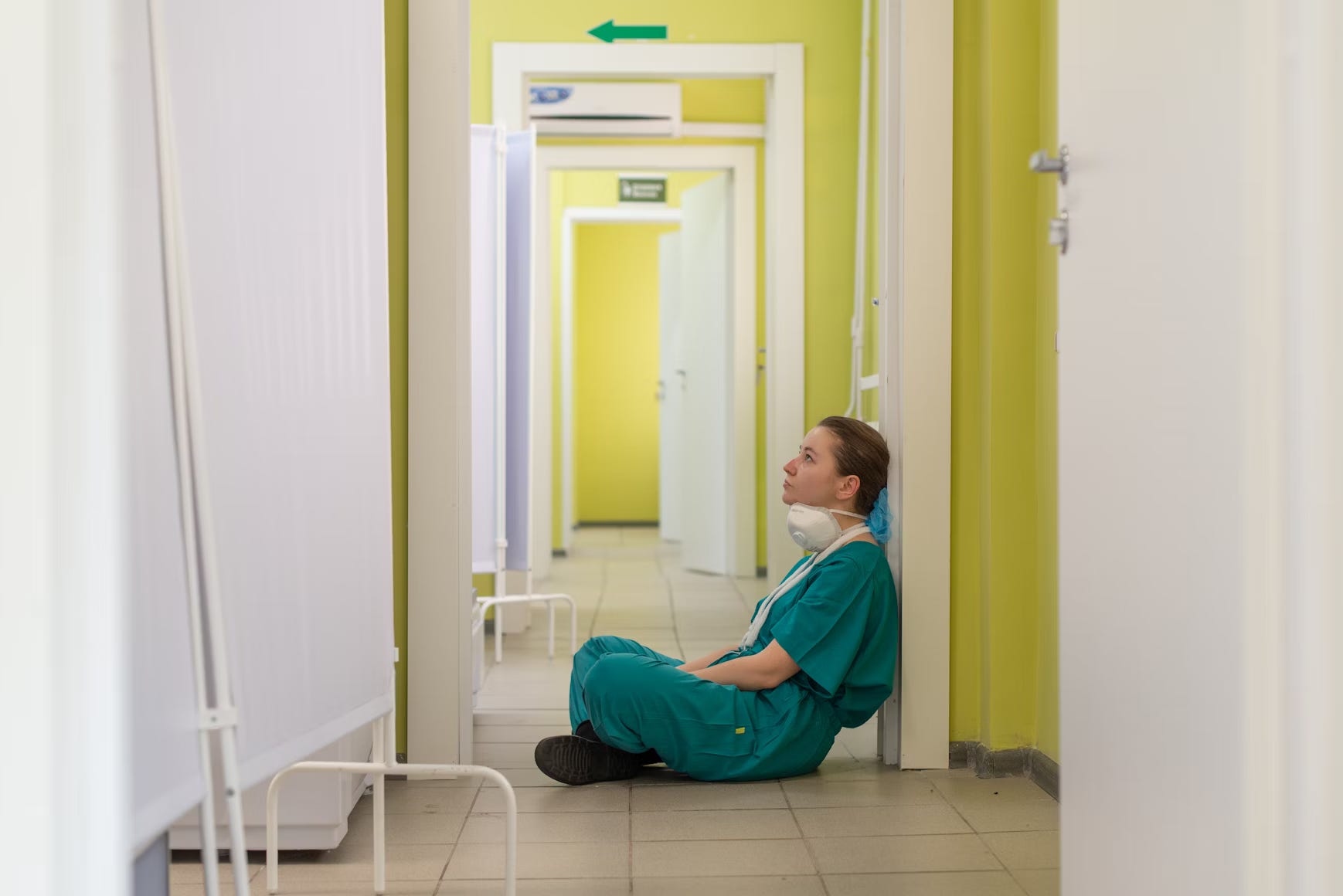
This was not just a system to capture voices for the sake of patients, or students, or survivors. It was a system that could serve the caregivers themselves. The ones who are asked to hold so much for others, and so rarely have anywhere to put their own.
In this way, Lingwell has come full circle. I built it to honor and carry the voices of caregivers and survivors. And now, from the first trial forward, those same caregivers were looking at it and saying: I need this too.
Learn more at lingwellhealth.com.